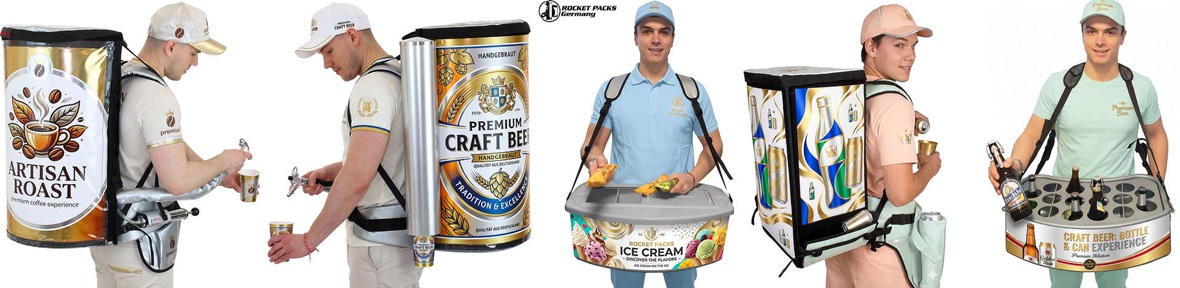
Drink Dispensing Backpack
The Ultimate Solution for High-Traffic Event Catering
- The drink dispensing backpack lets you serve beverages on the go!
- Ideal for outdoor events, festivals, and parties.
- Keep your drinks cool and serve them anywhere.
FAQ – Turning a Drink Backpack Demonstration into an Operator Training Standard
A product demonstration can introduce the visible handling of a drink dispensing backpack. For professional use, the individual actions must then be converted into a clear operating routine that different employees can follow consistently. The following questions explain how responsibilities, training steps, handovers and service interruptions can be organised.
What is the difference between watching the video and completing operator training?
The video provides visual orientation, whereas operator training teaches the complete procedure for the specific equipment being used. Staff must practise preparation, carrying, dispensing, returning the unit and reporting irregularities.
A person who has watched the demonstration should not automatically begin serving visitors. The practical instruction must use the supplied backpack, intended beverage and actual accessories.
Which responsibilities should be assigned before the first training session?
The project needs named responsibility for beverage preparation, equipment inspection, filling, operator instruction and cleaning. It should also be clear who decides whether a backpack may return to service after a fault.
Without defined roles, important checks can be assumed to have been completed by someone else. A short written allocation helps prevent gaps between the catering, event and promotional teams.
Who should conduct the practical instruction?
The trainer should understand the exact container, dispensing method and accessories supplied for the project. General event experience alone does not confirm knowledge of the individual connections or operating sequence.
For a larger team, one or two responsible employees can first be trained in detail. They can then supervise the remaining operators using the same approved procedure.
What should every operator know about the selected beverage?
Each operator should know whether the drink is still or carbonated, hot or cold and whether special handling rules apply. This information affects movement, dispensing and the response to an interrupted flow.
Operators do not need to perform technical adjustments beyond their assigned role. They must, however, recognise when the equipment is behaving differently from the trained condition.
Why should the training use the final beverage whenever possible?
The actual drink provides the most realistic impression of flow, portion control and handling. Water can be useful for an initial leak check, but it does not reproduce carbonation, foam, temperature or the consistency of every recipe.
Final instruction should therefore include the intended product under conditions that resemble the later event.
How should the training area be prepared?
The area should include a stable preparation surface, sufficient walking space and a defined dispensing point. Typical obstacles from the later venue can be marked or reproduced where practical.
The first exercises should not take place inside a live visitor flow. Operators need space to repeat movements and correct mistakes without creating a risk for guests.
Which sequence should be taught before the backpack is lifted?
The equipment is first checked while it remains securely supported. The trainer confirms that the container is closed, the beverage path is connected and all accessories are positioned correctly.
- Identify the model and assigned beverage
- Inspect container, lid and visible seals
- Check hose routing and tap position
- Confirm the cup supply
- Inspect the harness and fastening points
- Check pressure equipment where fitted
- Dispense a control portion
- Confirm that all external surfaces remain dry
Why should the harness adjustment be taught as a separate step?
The carrying system determines how the filled weight is distributed across the operator’s body. An unsuitable adjustment can cause the backpack to move excessively or place unnecessary strain on the shoulders.
The correct setting is established individually. Staff should also know which straps may be readjusted during a shift and which parts must not be altered while the system is being operated.
How should employees practise putting on a filled backpack?
The backpack should begin on a stable raised surface or be transferred using the approved assistance procedure. Operators should not twist suddenly or lift a heavy filled unit by one strap.
The same method should be used during the actual event. A safe lifting routine must remain practical even when several operators are changing shifts.
What should the first walking exercise include?
The operator should walk slowly, stop, turn in both directions and return to the starting point. The trainer observes the backpack position, hose control and clearance behind the wearer.
Only after these movements remain controlled should the exercise include cups, dispensing and interaction with another person.
Why must operators learn to account for the space behind them?
The wearer cannot fully see the rear and side areas occupied by the backpack. Turning too closely near visitors, furniture or equipment can cause contact even when the operator’s own body has sufficient clearance.
Training should therefore include deliberate turns and backward awareness. Staff should avoid stepping backwards unless the route is clearly visible.
How is a standard dispensing movement taught?
The operator stops securely, removes one cup, positions it below the outlet and opens the tap in a controlled manner. The flow is stopped before the cup is moved away.
Repeating the same order reduces unnecessary hand changes. It also makes it easier for supervisors to identify where a problem occurs.
Why should portion control be included in the training?
Consistent portions improve stock planning and reduce accidental overfilling. The operator needs a clear visual reference for the intended quantity in the selected cup.
The target may differ between sampling, hospitality and retail service. It should therefore be defined for the specific project rather than left to each employee.
How should staff be trained to handle the cup dispenser?
The operator should remove one cup without pulling several from the stack or touching the inside. The training must use the same cup format planned for the event.
If the cups jam or fall out during movement, the format or dispenser setting must be corrected before service. Repeated operator effort is not an acceptable substitute for cup compatibility.
What should operators do when the beverage flow becomes weaker?
The operator should stop serving and follow the assigned basic check rather than making unapproved adjustments. Depending on the configuration, the cause may involve the fill level, a compressed hose, venting or the selected pressure method.
If the trained check does not restore normal operation, the backpack returns to the technical or refill station. Pressure must never be increased simply because the flow has changed.
Which warning signs require an immediate stop?
Service must stop when beverage escapes from the container or connections, the tap no longer closes or the carrying system becomes unstable. Unusual pressure behaviour and damaged external parts also require removal from the visitor area.
The operator should not attempt a repair while wearing the backpack. The unit is placed on the designated surface and handed over to the responsible person.
How should an operator respond to a spill near visitors?
The dispensing activity is paused and the affected area is secured or cleaned according to the event procedure. The backpack is checked before service resumes.
The incident should be reported even when only a small amount escaped. Repeated minor spills may indicate a handling, cup or equipment issue that needs correction.
What is the correct response when a cup falls on the floor?
The cup is discarded and not returned to the dispenser or used for a visitor. Clean cups must remain protected from contact with the floor, used items and unsuitable surfaces.
The operator should not bend deeply with a filled backpack to retrieve objects in a crowded area. Another team member can remove the item where necessary.
Why should communication phrases be standardised?
Short agreed phrases help operators communicate consistently with visitors and the support team. Staff should be able to identify the beverage, explain the portion and direct detailed questions to the correct contact.
Internal signals are also useful when cups, beverage or technical assistance are needed. This prevents employees from leaving their service zone without informing the team.
What should the operator know about the refill process?
The operator should know when to return, where to place the backpack and which information to give the refill team. Refilling itself may be assigned to trained station personnel rather than to every wearer.
A clear division reduces incorrect closures, mixed beverage batches and incomplete checks before the next route.
How should a backpack be handed over between two operators?
The unit is first placed on a stable support and then removed from the first wearer. The harness is adjusted for the next person before the backpack is lifted again.
The handover includes the current fill status, beverage condition and any observation from the previous route. A direct shoulder-to-shoulder transfer should not replace the approved procedure.
What should be documented during a shift handover?
The next operator should know how much beverage remains, whether the cups were replenished and whether the equipment behaved normally. Any dripping, restricted flow or unusual movement must be reported.
A brief checklist can be used when several systems and operators are active. This prevents information from being lost during busy periods.
How are breaks included in the operating routine?
Breaks should occur at the designated service base, where the backpack can be removed safely. The system should not remain unattended in a public area.
The project plan determines whether another operator takes over or the unit pauses until the same employee returns. Beverage condition and fill status are checked before restarting.
Why should the operator not clean or dismantle the system during public service?
Cleaning and dismantling require a controlled work area with the appropriate equipment. Opening containers or disconnecting hoses in a visitor zone can lead to spills, contamination or unsafe handling.
Pressure-operated systems must be isolated and fully depressurised before relevant components are opened. These steps belong to trained station personnel unless another responsibility has been expressly assigned.
What additional training is required for a hand-pump configuration?
The operator must learn how to recognise decreasing dispensing pressure and how the pump is used within the approved procedure. Pumping should be measured and linked to the observed beverage flow.
Repeated excessive pumping is not an acceptable response to a blocked line or closed connection. The equipment must return for inspection if normal flow cannot be restored.
What additional rules apply to a regulated CO₂ configuration?
The gas cylinder must remain secured and the regulator must not be adjusted by unassigned personnel. Operators need to recognise the normal display and know when to stop the service.
- Do not loosen pressure connections during operation.
- Do not alter the regulator without authorisation.
- Do not continue with a visibly damaged pressure hose.
- Do not use an unsecured gas cylinder.
- Close the gas supply before technical dismantling.
- Release residual pressure before opening the container.
How should training differ for hot beverages?
Hot-drink instruction places additional emphasis on controlled movement, dry cup handover and avoiding contact with heated product-contact parts. The operator must stop completely before dispensing.
The team also needs a clear response procedure for leaks and spills. A hot beverage requires greater separation from moving crowds than a cold sampling portion.
How can operator performance be evaluated fairly?
Evaluation should consider safe handling, consistent portions, correct communication and compliance with the return procedure. Speed alone is not a sufficient measure.
An operator who serves slightly more slowly but avoids spills and recognises irregularities may be better suited to the role than someone who prioritises output over control.
Why should the trainer observe several consecutive service cycles?
One short exercise may not reveal errors that appear after repeated movement or a decreasing fill level. Several cycles show whether the routine remains stable and whether the operator follows the same checks each time.
The observation should include refilling, handover or a planned break, not only the period in which drinks are served.
What information should be recorded in the training log?
- Name of the trained operator
- Backpack model and beverage configuration
- Date of instruction
- Working quantity used during training
- Completed preparation and carrying exercises
- Dispensing and cup-handling assessment
- Pressure-system instruction where applicable
- Identified restrictions or support needs
- Name of the responsible trainer
The record supports consistent retraining and makes it easier to identify which employees are approved for a particular configuration.
When should refresher training be provided?
Refresher instruction is appropriate after a long period without use, a change of model or a modification to the beverage and pressure configuration. It should also follow recurring operating errors or an incident.
A brief review before each event can confirm routes, responsibilities and project-specific procedures even when the team already knows the equipment.
How can the video be used within an internal training document?
The footage can introduce each visible stage and provide a shared visual reference. Written instructions should then state the checks, responsibilities and limits that may not be visible in the recording.
The final document must relate to the actual supplied system. A general promotional video should not be treated as the only source of operating instructions.
Which project details are required to prepare an appropriate training concept?
- Selected backpack and dispensing configuration
- Exact beverage and serving temperature
- Planned portion and cup format
- Number of operators and shift structure
- Length and conditions of the service routes
- Location and staffing of the refill station
- Payment or sampling procedure
- Hand-pump or regulated CO₂ operation
- Venue-specific safety requirements
- Event date and planned preparation period
When these points are defined before the training session, the visible product demonstration can be converted into a clear and repeatable operating routine for the project.
[1]: https://www.drink-backpack.com/video-drink-dispensing-backpack.html "Drink Dispensing Video: Mobile Solutions in Edinburgh & UK"International Shipping and Support for Global Beverage Brands
Make your brand shine with customizable backpack dispensers. Add your logo, choose your colors, and create a walking advertisement that serves drinks!