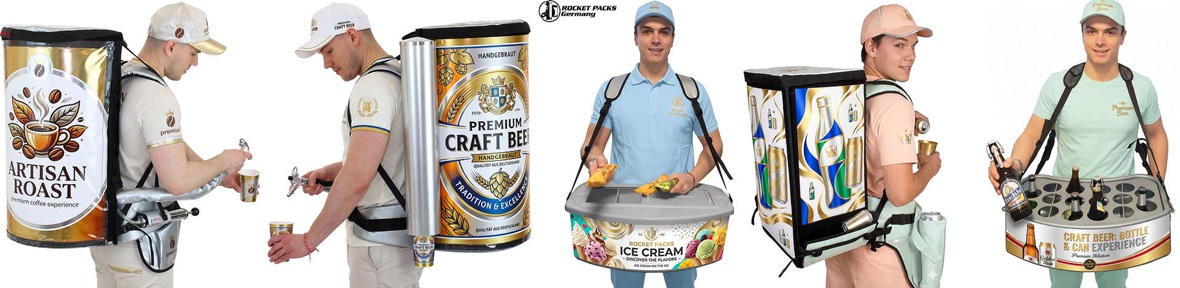
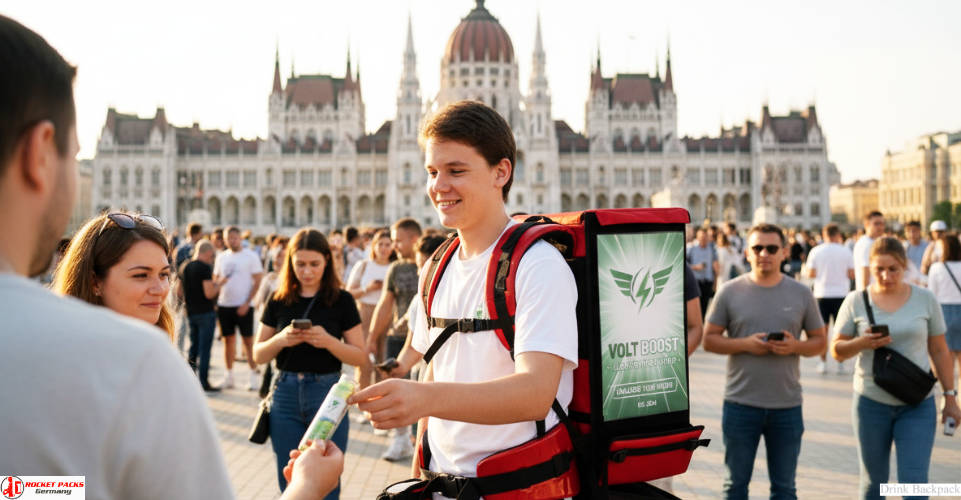
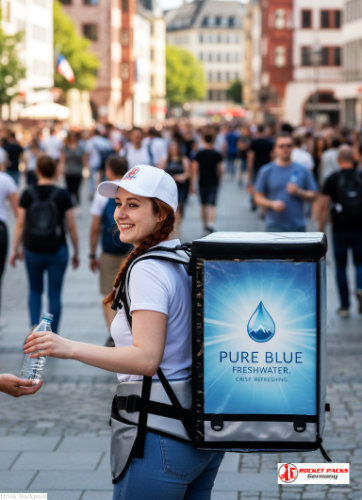
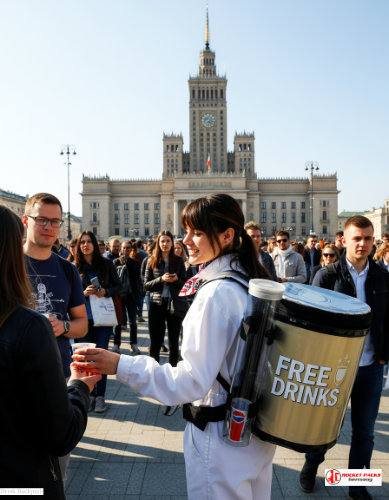
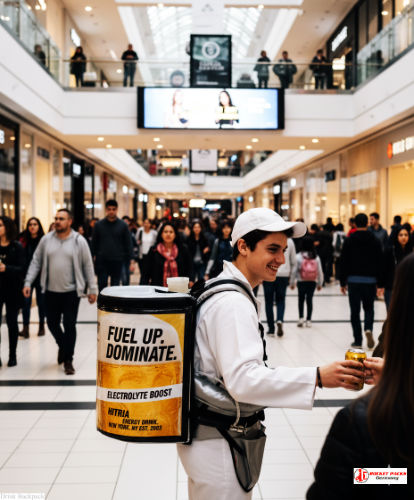
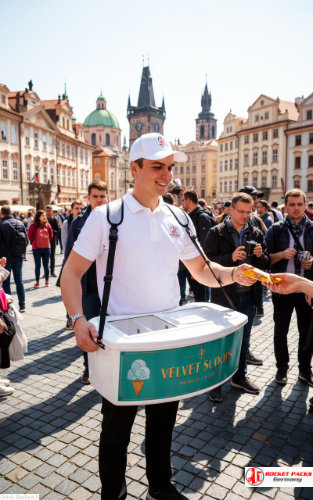
Drink Dispensing Backpack Configuration – Containers, Taps and Pressure Options
A drink dispensing backpack is not a single universal product. Container material, dispensing method, tap, filling procedure and beverage type must be specified as one compatible system. The following information helps distinguish the available functions and prevents unsuitable components from being combined.
Why is a drink dispensing backpack not a one-size-fits-all system?
Different beverages require different container, pressure and dispensing arrangements. A configuration for still water may work by gravity, while beer or a carbonated soft drink requires pressure-compatible components.
Hot drinks also place different demands on materials and handling. The correct backpack therefore depends on the complete beverage application rather than on capacity or appearance alone.
Which components must be specified together?
The beverage container, lid, seals, hose connections, dispensing line and tap form one product path. If pressure is required, the pump or CO₂ equipment must also be compatible with that path.
Changing one part can affect the complete system. A different tap, for example, may alter flow control but cannot make an unsuitable container safe for pressure operation.
How does the container material affect the intended use?
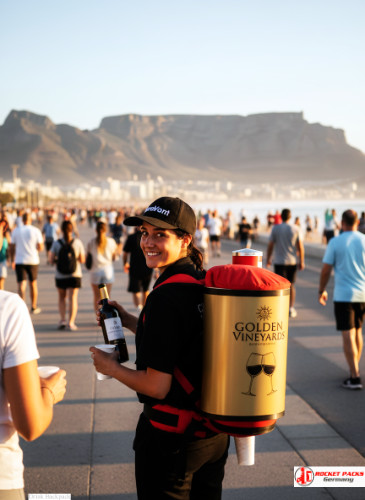
Rocketpacks configurations use PE plastic or stainless-steel beverage containers, depending on the model. The material influences weight, filling method, cleaning and suitability for particular beverages.
Plastic can be appropriate for selected still or cold drinks. Stainless steel is generally preferred where repeated professional use, hot beverages or pressure-assisted dispensing must be considered.
Why should strongly coloured or aromatic drinks be discussed before ordering?
Colour, aroma and ingredients can remain on beverage-contact surfaces after use. Plastic containers may absorb odours or staining more readily than stainless steel.
This does not automatically make a beverage unsuitable, but it affects material selection and cleaning. The exact recipe should be reviewed when the same backpack will later be used for different products.
What does gravity-fed dispensing mean?
Gravity-fed dispensing moves a suitable still beverage from the container to the tap without a pump or gas cylinder. The liquid flows because the dispensing point is positioned below the beverage level.
The container must allow air to enter as liquid leaves. A closed vent, compressed hose or unsuitable beverage consistency can interrupt the flow even though product remains inside the tank.
When is a hand-operated air pump used?
A hand pump generates dispensing pressure manually. The operator pumps again when the beverage flow begins to decrease.
This configuration does not require electricity or a gas cylinder. It must nevertheless use a pressure-compatible container, lid, connections and dispensing line.
What changes when a regulated CO₂ supply is selected?
A regulated CO₂ configuration maintains the required dispensing pressure without repeated manual pumping. It adds a gas cylinder, pressure regulator, pressure hose and compatible connections to the system.
The cylinder must be secured in the intended position. The regulator must match the application, and the permitted operating pressure of every connected component must be observed.
Does CO₂ automatically improve every carbonated beverage?
No. CO₂ equipment provides and maintains pressure, but it does not correct an unsuitable beverage temperature, damaged seal, restricted hose or incorrect tap setting.
The required pressure depends on the drink and dispensing arrangement. Increasing the regulator setting without identifying the cause of poor flow can place unnecessary stress on the system.
Why are pressure accessories not universally interchangeable?
Regulators, hoses, couplings and container connections differ in design and operating range. Similar-looking parts may use different threads, seals or connection standards.
Existing customer equipment can only be included after compatibility has been confirmed. Photographs, technical labels and connection details are helpful when the exact component designation is unknown.
What is the difference between a standard tap and a premium tap?
A standard tap opens and closes the beverage flow. A premium or compensator tap provides an additional means of regulating the flow rate directly at the dispensing point.
The adjustable version can be useful for beer and carbonated drinks. It cannot compensate for warm product, excessive pressure or a restricted beverage line.
When is a simple tap sufficient?
A simple tap can be suitable for a predictable still beverage with a stable gravity-fed flow. In this application, additional flow adjustment may not be required.
The decision should still consider portion size and operator control. A more adjustable tap may be useful when several cup formats or changing dispensing conditions are expected.
Why should the container size be selected from the service cycle?
The useful capacity is the quantity an operator can realistically dispense before returning to the refill point. A larger container reduces refill frequency but increases the weight carried throughout the route.
A smaller working fill may be more practical for stairs, narrow passages or short sampling sessions. The maximum available volume is not automatically the most suitable operating quantity.
What does the stated empty weight exclude?
The empty weight describes the backpack without beverage. The actual working load also includes the liquid, cups, tap equipment, accessories and any pressure components.
Operator planning should therefore use the complete filled weight. Trying on an empty backpack does not provide a reliable impression of balance or physical workload.
What does the insulation inside the backpack provide?
The insulation slows the transfer of heat between the beverage and the surrounding air. It can help delay warming of a cold drink or cooling of a hot drink.
It is not an active refrigeration or heating system. The beverage must already be prepared at the required serving temperature before it is filled into the container.
Why can no fixed temperature period apply to every event?
Temperature development depends on the starting temperature, fill level, container type, ambient conditions and frequency of dispensing. A nearly full container behaves differently from a small remaining quantity.
For temperature-sensitive projects, the intended working fill and route duration should be tested under realistic conditions rather than relying only on a general insulation description.
Why must the filling method be confirmed before the backpack is ordered?
Not every container uses the same filling procedure. Some configurations are filled through an open container inlet, while a closed transfer from a keg requires suitable beverage and pressure connections.
The backpack price alone therefore does not define how the beverage will enter the system. The source container, available equipment and required filling process must be included in the technical specification.
What information is required for filling from a keg?
The keg type, fitting, keg coupler and available gas or dispensing equipment must be identified. A photograph of the complete connection is useful when the fitting name is not known.
- Keg manufacturer and size
- Type of keg fitting
- Existing keg coupler
- Available pressure supply
- Use of a cooler or fixed dispensing installation
- Preferred open or closed filling procedure
Without these details, the backpack can be specified, but the required transfer equipment cannot be determined reliably.
Can one backpack be used for several beverages?
A system may be used for different compatible beverages after complete cleaning of all product-contact parts. Container, hose, seals, couplings and tap must suit each intended product.
A beverage change should not be treated as a simple refill. Sugar, colour, coffee oils, flavours and allergens can remain in areas that are not visible from inside the container.
Which liquids require an individual suitability check?
Thick products, drinks containing pulp or particles and recipes that separate during service require prior assessment. These products may restrict the hose, settle inside the container or interfere with the tap.
The systems are intended primarily for clear, sufficiently fluid beverages. A sample recipe or detailed ingredient description helps determine whether testing is required.
How is cup compatibility determined?
The available universal cup dispenser is intended for stackable disposable or reusable cups within the specified size range. Cup volume alone does not confirm that a particular cup will fit.
The rim diameter, wall shape and stacking behaviour are equally important. A sample should be tested before a large quantity of cups is purchased.
What happens when cups are too small or too tightly stacked?
Cups that are too small may not be retained securely and can fall from the dispenser during movement. Cups that are too wide or tightly nested may be difficult to remove individually.
The stack should never be forced into the tube. A different cup format or a compatible dispenser arrangement should be selected instead.
How are advertising graphics added to the backpack?
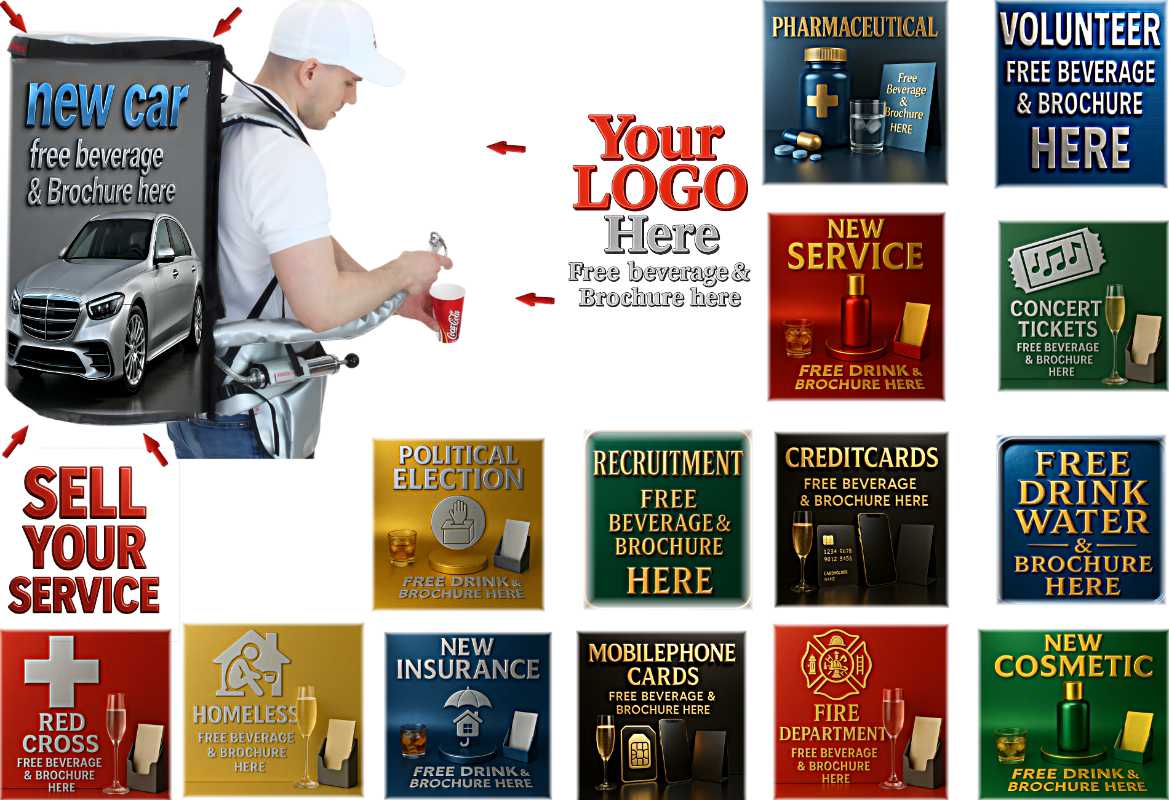
Depending on the model, printed paper inserts are placed behind transparent protective surfaces. The artwork can then be replaced for another brand, campaign or event.
The visible dimensions are model-specific. Printing should begin only after the exact backpack and advertising area have been confirmed.
Why is a test print recommended?
A flat digital layout does not show how the artwork will appear on a filled and worn backpack. Curved surfaces, seams and movement can change the visible area.
A single test insert should be fitted before the complete print quantity is produced. Logos and essential text can then be repositioned if necessary.
What should be checked when the system is delivered?
The delivered components should be compared with the quotation or proforma invoice. Model, container, tap, hoses, pressure equipment and accessories must match the agreed configuration.
- Inspect the backpack and container for transport damage.
- Check the lid, seals and connections.
- Confirm the supplied tap version.
- Verify pressure accessories where included.
- Test the cup dispenser with the intended cup.
- Check the dimensions of the advertising area before printing.
How should the first functional test be carried out?
The system should first be assembled on a stable surface and tested with a suitable test liquid. This allows the beverage path, connections, tap and basic flow to be checked before the backpack is worn.
The test should use a realistic fill when the harness is adjusted. All external surfaces and connections must remain dry before the system is approved for service.
Why does a water test not confirm performance with beer or soft drinks?
Water can reveal leaks, blocked hoses and basic operating problems. It does not reproduce carbonation, foam formation or the pressure behaviour of beer and carbonated soft drinks.
After the initial water test, the final setup should be checked with the actual beverage at the intended serving temperature.
What must be verified before a pressure-operated backpack is worn?
The complete pressure side must be connected correctly and checked for leakage. The gas cylinder must be secured, and the regulator must remain within the permitted operating range of the system.
A damaged seal, hose or coupling must not remain in service. Before the container is opened or pressure connections are removed, the gas supply is closed and all residual pressure is released.
Which components require regular inspection?
- Container and lid
- Seals and coupling points
- Beverage and pressure hoses
- Dispensing tap
- Hand pump or pressure regulator
- Gas-cylinder fastening where fitted
- Shoulder, chest and waist straps
- Cup dispenser and accessory attachments
Inspection intervals depend on use and cleaning frequency. Components showing damage, deformation or unreliable sealing should be replaced before the next event.
Which information allows us to configure a complete system?
- Exact beverage and relevant ingredients
- Still or carbonated application
- Required serving temperature
- Preferred container capacity
- Expected working fill
- Gravity, hand-pump or CO₂ operation
- Open filling or transfer from a keg
- Required tap and cup format
- Number of backpacks
- Event date and complete delivery destination
When these details are included in the first enquiry, the container, dispensing equipment and accessories can be assessed as one compatible configuration.
[1]: https://www.drink-backpack.com/drink-dispensing-backpack.html "Drink Dispensing Backpack: Mobile Solutions"