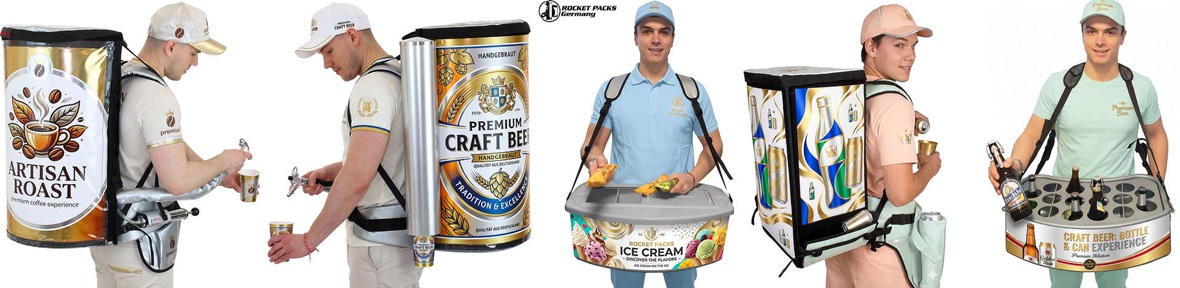
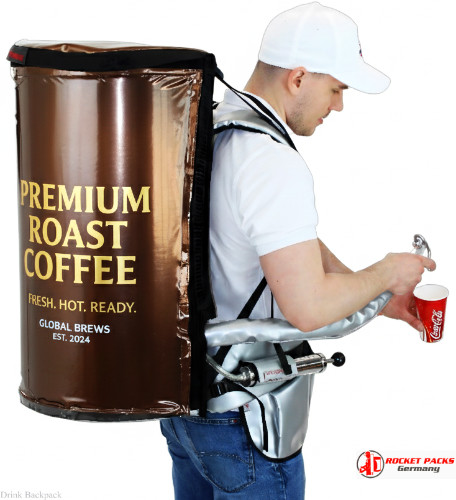
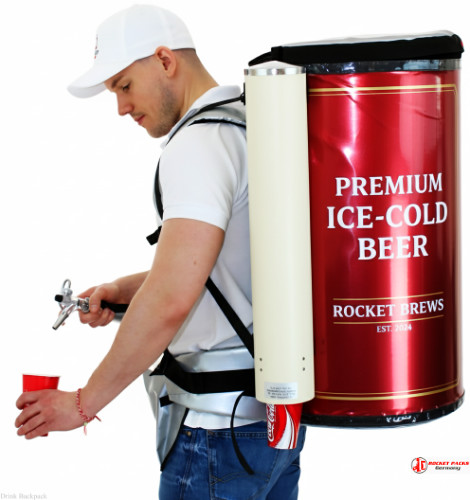
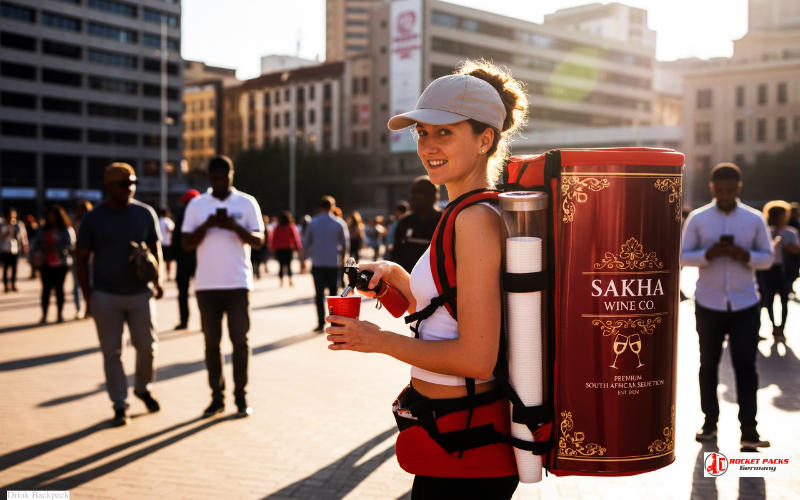
Drink Backpack Systems for Mobile Beverage Service at Events
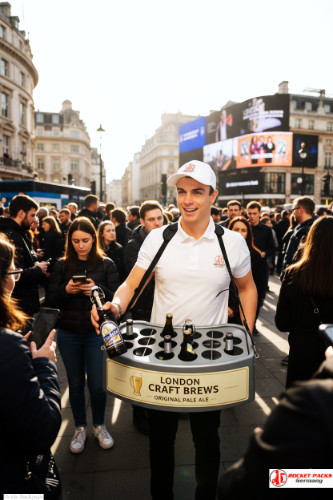
A drink backpack extends beverage service beyond a fixed counter and brings the dispensing point directly into selected visitor areas. Before choosing a model, the beverage, service objective, operating route, refill process and required number of operators should be considered as one complete workflow.
What should be defined before selecting a drink backpack?
The first decision is what the mobile team is expected to achieve. Selling full portions, distributing product samples and providing drinks to invited guests require different quantities, staffing arrangements and service routines.
The equipment should be selected only after the intended process is clear. This prevents a system from being chosen solely because of its appearance or nominal container capacity.
How does beverage sales differ from a sampling campaign?
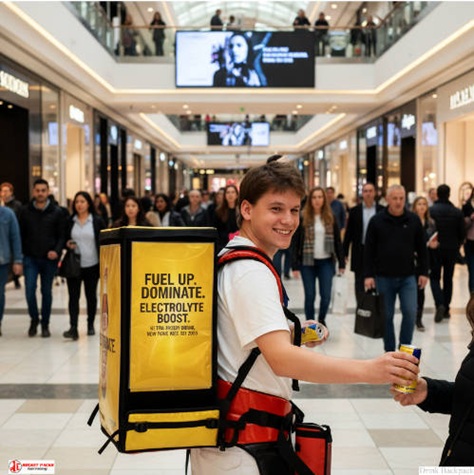
Mobile sales combine dispensing with pricing, payment and stock control. A sampling campaign normally uses smaller portions and focuses on reaching a defined audience within a limited period.
These differences affect cup size, working fill, route length and operator duties. A salesperson may need support with payment processing, while a sampling operator may require product information and a clear visitor-approach procedure.
When is a mobile dispensing system useful at an event?
A portable system is useful when visitors are spread across a large area, remain in designated seating zones or would otherwise need to walk a considerable distance to a beverage counter.
The backpack can supplement existing bars, catering stations or promotional stands. It does not remove the need for beverage preparation, storage, refilling and cleaning facilities.
Which areas should be examined before planning operator routes?
The event layout should be checked for narrow passages, stairs, seating rows, restricted zones and emergency routes. Operators need enough space to walk, turn and stop without obstructing visitors.
A route that appears suitable on a floor plan may be difficult with a filled backpack. A practical test at the venue or in a marked area provides a more reliable assessment.
Why should dispensing points be planned instead of allowing operators to stop anywhere?
Defined stopping points help keep the service organised and reduce congestion around the operator. They can be positioned near visitor groups without blocking entrances, walkways or access to fixed catering facilities.
The operator remains mobile between these points but uses controlled locations for dispensing and cup handover. This is particularly useful when demand causes several visitors to gather at the same time.
How should the refill station be positioned?
The refill station should be accessible to staff through a short and authorised route. It requires a stable work surface, beverage supply, clean cups and sufficient space to set down the backpack safely.
Visitors should not enter the preparation area. Clean equipment, returned systems and items awaiting cleaning should also be kept clearly separated.
Why should capacity be selected according to a service cycle?
The relevant quantity is the amount an operator can realistically distribute during one route. A larger tank reduces refill frequency but increases the weight carried through the entire service area.
A smaller working fill may be more practical when the refill point is nearby or demand varies throughout the event. Maximum capacity is therefore not automatically the most efficient operating quantity.
What information about the beverage affects the system configuration?
The beverage must be classified as still or carbonated and as hot or cold. Its consistency, ingredients and required serving temperature also influence the choice of container, dispensing line and tap.
Clear, sufficiently fluid beverages are easier to transport through a dispensing system than products containing pulp, particles or thick ingredients. Unusual recipes should be assessed before the equipment is ordered.
How are still drinks normally dispensed?
Suitable still beverages can be served from a gravity-operated configuration. The liquid moves from the container through the beverage line without a gas cylinder or electrical pump.
The container, venting arrangement and hose routing must be designed for this method. A blocked vent or compressed hose can interrupt the flow even when beverage remains in the tank.
What changes when carbonated beverages are served?
Carbonated beverages require a compatible pressure configuration. The container, lid, connections, beverage line and tap must all be suitable for the intended operation.
Depending on the selected system, dispensing pressure may be created manually or maintained through a regulated CO₂ supply. Pressure must never be increased before checking temperature, hose routing and the condition of the dispensing components.
Can hot and cold drinks be served from the same backpack?
This depends on the exact container and all beverage-contact components. A tank described as temperature-resistant does not by itself confirm that the hose, seals, couplings and tap are suitable for the same application.
Changing between different beverages also requires complete cleaning of the product path. Strong aromas, colours, sugar and coffee oils can remain in areas that are not visible from inside the container.
How should an operator’s working fill be determined?
The working fill should be based on expected portions, walking distance and the time before the next return to the refill point. The operator’s physical workload must be included in this decision.
A test with realistic liquid weight is more informative than trying on an empty backpack. It shows how the centre of gravity changes while walking, stopping and turning.
How many operators are required for a mobile beverage project?
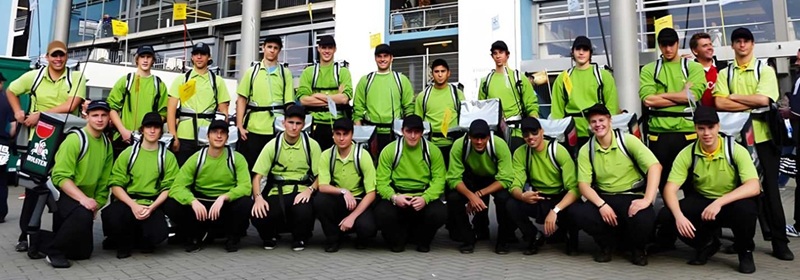
The number depends on the size of the service area, expected demand, route duration and refill time. Staff at the preparation station must also be considered, especially when several backpacks are used simultaneously.
One person may be able to prepare, carry and dispense during a small campaign. A larger operation may need separate responsibilities for filling, cup supply, payment, visitor coordination and technical checks.
What should operators practise before serving visitors?
Training should cover the complete process rather than only opening the tap. Each operator needs to know how to adjust the harness, lift the system safely, control the hose and place the backpack on a stable surface.
- Check the container, lid and connections
- Adjust shoulder, chest and waist straps
- Walk and turn with a realistic fill
- Remove cups without dropping the stack
- Dispense several portions consecutively
- Return safely to the refill station
- Report leaks or irregular beverage flow
- Empty and hand over the equipment correctly
Why is a pilot deployment useful before ordering a larger quantity?
A pilot shows how the system performs within the customer’s actual service process. It provides practical information about working fill, portion count, route duration and operator workload.
The results can be used to adjust the equipment and staffing plan before the project is expanded. A successful tap test alone does not confirm that the complete event workflow is suitable.
Which results should be recorded during a pilot?
The most useful records describe the full operating cycle. They show where time is spent and whether capacity, staffing or route planning should be changed.
- Quantity filled before each route
- Number and size of portions served
- Remaining beverage after the route
- Time spent in the visitor area
- Time required for refilling
- Number of cup reloads
- Operator feedback on fit and weight
- Locations where movement was restricted
- Technical or organisational interruptions
Can a promotional backpack replace a fixed brand stand?
A mobile unit can extend a campaign beyond the stand, but it does not perform every function of a fixed location. Detailed product discussions, storage, registration and preparation are often easier at a stationary base.
The backpack can attract attention, distribute samples or direct interested visitors to the main campaign area. Both parts should use the same information and visual identity.
How should replaceable advertising panels be planned?
The artwork should be prepared only after the specific backpack model and visible panel dimensions have been confirmed. Different backpack constructions do not necessarily use the same insert size.
A test print should be fitted to the actual system and viewed while it is being worn. Curved surfaces, movement and viewing distance can alter which parts of the design remain clearly visible.
What information works best on a moving advertising surface?
A moving panel should communicate one recognisable message rather than a detailed product description. The brand, beverage or campaign purpose should be understandable within a short viewing period.
Small text and complex instructions are difficult to read while the operator is walking. Additional information can be provided at a fixed stand or by a separate member of the campaign team.
What hygiene responsibilities must be assigned before the event?
The project plan should state who prepares the beverage, fills the containers, protects clean cups and cleans returned equipment. These duties should not remain undefined between the catering, promotional and technical teams.
The tap must be protected from contact with used cups, hands and unsuitable surfaces. Beverage-contact parts require cleaning according to the product previously dispensed.
When should a backpack be removed from service?
Operation should stop if beverage escapes from the container or connections, the tap cannot be closed properly or a carrying component is damaged. Pressure-operated systems must also be withdrawn if pressure cannot be maintained or controlled safely.
The system is placed on a stable surface before inspection. Pressurised connections must not be opened until the gas supply is closed and all remaining pressure has been released.
Which backup items are useful during professional operation?
The appropriate backup stock depends on the model and project size. Commonly used service components should be identified before the event so that one minor defect does not interrupt the entire operation.
Replacement seals, compatible hose connections or an additional tap may be useful for recurring projects. Spare parts must match the supplied configuration and should not be selected only by visual similarity.
How can a project be expanded from one backpack to a larger fleet?
Scaling should follow the results of the first deployment. The project team can compare demand, refill cycles and operator coverage before deciding how many additional systems are required.
For a larger fleet, consistent configurations simplify training, preparation and spare-parts management. Different setups should be used only where separate beverages or operating conditions make them necessary.
What should international customers clarify before requesting a quotation?
International enquiries require the complete delivery destination and the planned application. Existing keg, gas or dispensing equipment should be documented when it is intended to form part of the new system.
Connection standards, transport options and import requirements can differ by destination. Clear project information allows the equipment and shipping method to be assessed before the order is prepared.
Which details help us prepare a suitable proposal?
- Service objective: sales, sampling or hospitality
- Exact beverage and relevant ingredients
- Still or carbonated application
- Required serving temperature
- Planned portion size
- Length of one operator route
- Distance to the refill station
- Existing keg, pump or CO₂ equipment
- Required number of backpacks
- Event date and complete delivery address
When these points are included in the first enquiry, we can assess the beverage configuration, operating concept and transport requirements with fewer additional questions.
How does a project proceed after the system requirements are defined?
The selected backpack, beverage configuration, accessories, quantity and delivery destination are summarised in writing. Availability, transport costs and payment conditions are then confirmed for the specific order.
A general website presentation provides initial orientation but does not reserve equipment or define the final delivery scope. The agreed quotation or proforma invoice remains the basis for order processing.
Der Text orientiert sich am aktuellen Seiteninhalt sowie an den offiziellen Produktunterlagen zu den verfügbaren Getränke- und Behälterkonfigurationen. ([drink-backpack.com][1]) [1]: https://www.drink-backpack.com/ "Drink Backpack: Mobile Beverage Dispensing"